Ever looked in your fridge and wondered how to make veggies magical? Spring is full of fresh produce. Keto roasted veggies turn simple ingredients into a tasty side dish that makes meal prep exciting.
Picture crispy, caramelized edges and golden-brown perfection. A burst of flavor makes low-carb eating feel fancy. The spring vegetable roast is more than a recipe. It’s a way to enjoy delicious, healthy meals with little effort.
Keto roasted veggies are a great solution for busy cooks. With just a few ingredients and little prep, you get a side dish that goes well with any protein. It keeps your low-carb diet on track.
Table of Contents
Key Takeaways
- Keto roasted vegetables are quick and easy to prepare
- Perfect for spring meal prep and busy weeknights
- Transforms simple vegetables into delicious, caramelized dishes
- Supports a low-carb lifestyle with minimal effort
- Versatile and customizable to your taste preferences
Why Keto Roasted Vegetables Are Your New Meal Prep Essential
Starting your keto meal prep with roasted vegetables is a game-changer. These golden delights are more than a side dish. They’re a key to making low-carb meals better with little effort.
The Beauty of Simple, Caramelized Perfection
Roasting unlocks the full flavor of vegetables. High heat turns them into caramelized vegetables with deep flavors. It’s a simple yet amazing process. Natural sugars caramelize, making veggies taste amazing.
- Concentrates natural vegetable sweetness
- Creates crispy, golden-brown edges
- Enhances flavor without added ingredients
Quick Prep with Hands-Off Cooking
Preparing keto vegetable side dishes is now easier with hands-off cooking. Roasting is quick and doesn’t need constant attention. It’s ideal for those with busy schedules who want healthy meals fast.
“Roasting is the secret weapon for delicious, low-effort keto meal prep that keeps you on track with your nutrition goals.”
Chop, season, and spread your veggies on a baking sheet. Let the oven do the rest. You can prep other parts of your meal while enjoying perfectly cooked veggies.
Best Keto-Friendly Vegetables for Roasting
Choosing the right low-carb vegetables is key for a great keto roasting experience. Not all veggies are good for keeping you in ketosis. Knowing which ones are best is important for your meal prep.
Your guide to the best keto veggies includes tasty, nutrient-rich options. These will make your meals exciting and keep your carb count low.
- Cruciferous Vegetables (Top Keto Choices):
- Broccoli
- Cauliflower
- Brussels Sprouts
- Summer Squash Options:
- Zucchini
- Yellow Squash
- Flavor Boosters:
- Bell Peppers
- Red Onions
Choose low-carb veggies for roasting with minimal net carbs. Some veggies need careful portioning to stay in ketosis.
| Vegetable | Net Carbs (per 100g) | Keto Friendliness |
|---|---|---|
| Broccoli | 4g | Excellent |
| Cauliflower | 3g | Excellent |
| Zucchini | 3g | Great |
| Bell Peppers | 5g | Good (in moderation) |
Pro tip: Roasting these low-carb veggies brings out deep flavors. It also makes them crispy, making your keto meals more satisfying.
Seasonal changes keep your roasted veggie game fresh. Spring offers tender, fresh veggies. Winter brings heartier options that roast beautifully.
Essential Ingredients for Perfect Keto Roasted Vegetables
Turning simple veggies into a tasty keto dish needs the right stuff. Quality oils, smart seasonings, and a bit of creativity are key.
Choosing the Right Oil for Roasting
Finding the best olive oil for roasting can make your keto veggies stand out. The best oil should:
- Enhance flavor
- Have a high smoke point
- Coat veggies evenly
- Be keto-friendly
| Oil Type | Smoke Point | Flavor Profile |
|---|---|---|
| Extra Virgin Olive Oil | 375°F | Rich, fruity |
| Avocado Oil | 520°F | Neutral, smooth |
| Coconut Oil | 350°F | Subtle tropical |
Seasoning Blends That Elevate Your Veggies
Making the perfect keto seasonings can turn your roasted veggies into a work of art. The trick is to mix flavors that boost taste without being too much.
A basic seasoning mix usually has:
- Garlic powder
- Italian seasoning
- Sea salt
- Black pepper
For those who like to try new things, add spices like paprika, cumin, chili powder, rosemary, or thyme. They can give your keto veggies a unique taste.
Step-by-Step Guide to Roasting Spring Vegetables
Learning to roast keto veggies is simple. This guide will show you how to make tasty, healthy, and low-carb veggies. Your meal prep will never be the same.
Here’s how to roast veggies for your keto diet with easy steps:
- Preparation: Clean and cut your spring veggies into 1-2 inch pieces. This makes them roast evenly.
- Preheat: Heat your oven to 425°F (218°C). This high heat is key for caramelizing your veggies.
- Seasoning: Mix your veggies with olive oil, garlic powder, sea salt, and black pepper in a big bowl.
- Arrangement: Put the veggies in a single layer on a baking sheet. Make sure they’re not too close together for crispy edges.
Roasting veggies step-by-step needs focus. Start with a 15-minute roast, then flip them with tongs. Roast for another 8-15 minutes until they’re tender.
Pro tip: For crispy edges, broil the veggies for 2-3 minutes at the end. This makes them taste like they’re from a restaurant.
Remember, the secret to perfect keto roasted vegetables is even coating and proper spacing on the baking sheet.
Timing Chart for Roasting Different Keto Vegetables
Learning to roast keto friendly vegetables is all about knowing their cooking times. Your roasting time chart is key to getting perfectly caramelized, tender veggies every time.
Each vegetable roasts differently, based on its density, water content, and size. Knowing the exact cooking times lets you make tasty, low-carb sides with great results.
Roasting Time Recommendations for Low-Carb Vegetables
| Vegetable | Roasting Time | Temperature |
|---|---|---|
| Asparagus | 12-20 minutes | 425°F |
| Bell Peppers | 20-35 minutes | 425°F |
| Broccoli | 25-30 minutes | 425°F |
| Cauliflower | 25-30 minutes | 425°F |
| Brussels Sprouts | 25-35 minutes | 425°F |
| Zucchini | 15-30 minutes | 425°F |
Here are some tips for roasting veggies:
- Cut denser veggies into smaller pieces for faster cooking
- Roast harder veggies first, then add softer ones
- Keep the temperature at 425°F for most veggies
Make sure to slice veggies evenly for even cooking. Thinner slices cook faster, while thicker ones need more time to get tender and caramelized.
Perfectly roasted veggies are the heart of tasty keto meal prep!
Seasoning Variations to Keep Your Keto Roasted Vegetables Exciting
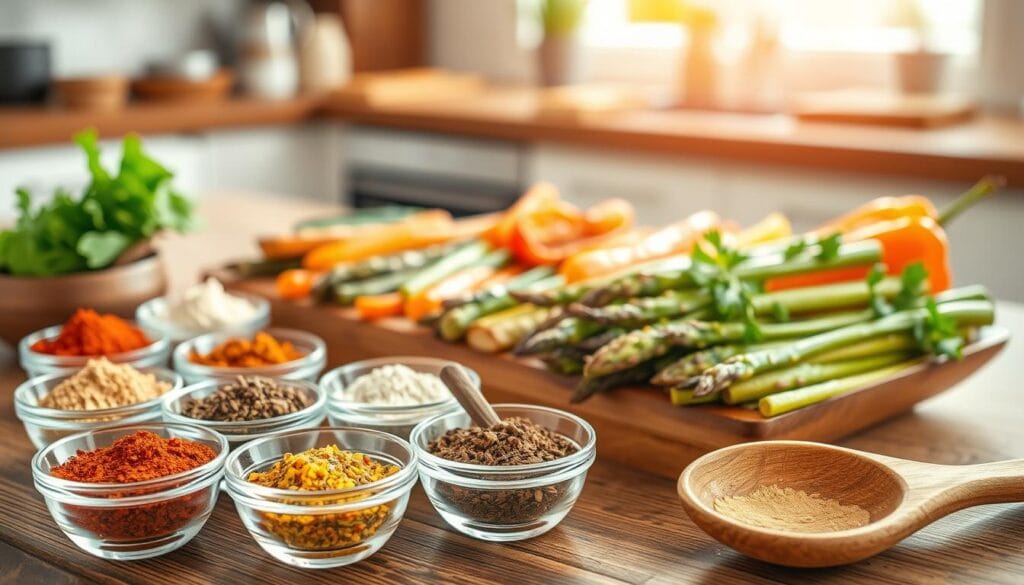
Make your keto vegetable recipes exciting with creative seasoning. Exploring different flavors keeps your roasted veggies tasty and fresh.
Try these flavor combinations to boost your low-carb side dishes:
- Mediterranean Herb Blend: Mix rosemary, thyme, and garlic powder for a rich taste
- Smoky Spice Mix: Use paprika, cumin, and chili powder for a deep flavor
- Cheesy Umami Topping: Add grated Parmesan or crumbled feta in the last minutes
- Tangy Balsamic Twist: Drizzle balsamic vinegar halfway through cooking
When trying new seasonings, add dry spices before roasting and fresh herbs after. This keeps flavors bright and avoids burning. Your keto vegetable recipes will always be exciting.
Pro tip: Always have low-carb seasonings like dried herbs, ground spices, and quality salt ready. They can turn simple roasted veggies into gourmet side dishes without extra carbs.
How to Achieve Golden Brown Caramelization Every Time
Mastering keto roasted vegetables is all about caramelization. It’s not just about tossing veggies in the oven. It’s about getting crispy, golden-brown edges that turn simple produce into a work of art.
To get crispy roasted veggies, you need to know a few secrets. Success comes down to preparation, temperature, and spacing.
The Secret to Crispy Edges Without Mushiness
Here are the key steps for maximum caramelization:
- Pat veggies dry before roasting to remove excess moisture
- Cut veggies into uniform sizes for even cooking
- Spread veggies in a single layer with space between pieces
- Avoid overcrowding the baking sheet
Temperature and Pan Placement Tips
Roasting at the right temperature is key for keto roasted veggies. Aim for 425°F and use these tips:
- Position your oven rack one level higher than the middle
- Use a heavy-duty baking sheet for better heat distribution
- Consider a quick 2-3 minute broil at the end for extra caramelization
“The magic of caramelization happens when vegetables meet high heat and have room to breathe.” – Professional Chef
Pro tip: Turning veggies halfway through cooking ensures even browning and prevents burning on one side.
Pairing Your Keto Vegetable Side Dishes with Proteins
Pairing proteins with your roasted vegetables makes complete keto meals easy. Your keto vegetable side dishes can turn any protein into a gourmet dinner. This satisfies your nutritional needs and taste buds.
Chicken is a great choice for tasty protein combinations. Here are some delicious pairings:
- Spinach-stuffed chicken breast with roasted asparagus
- Crispy baked chicken thighs alongside herb-roasted zucchini
- Air fryer chicken wings with caramelized Brussels sprouts
Red meat fans will love how roasted vegetables enhance their steak. Try these pairings:
- Ribeye with garlic-roasted mushrooms
- Sirloin alongside roasted bell peppers
- Filet mignon with Mediterranean-spiced vegetable medley
Seafood lovers can also enjoy complete keto meals. Here are some great combinations:
- Pan-seared salmon with roasted cauliflower
- Garlic butter shrimp paired with roasted broccoli
- Baked cod with herb-infused vegetable roast
Pro tip: Add flavor to your keto vegetable side dishes with sauces. Balsamic glaze, basil pesto, or tahini are great choices. They make every meal exciting.
Meal Prep and Storage Solutions for Roasted Vegetables
Keto meal prep gets easier with the right storage for roasted vegetables. Learning how to keep your low-carb dishes fresh saves time. It also means you always have healthy meals ready.
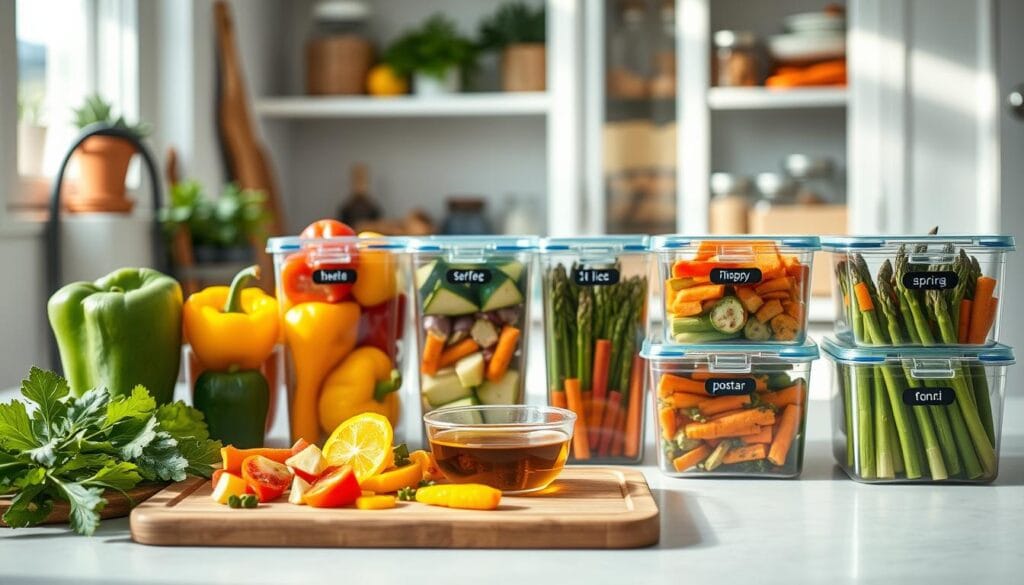
To keep your roasted veggies fresh, plan ahead and use the right containers. Here are key tips for storing your keto-friendly veggies:
- Refrigeration Guidelines
- Store in airtight containers
- Keep for 3-4 days maximum
- Best used in salads, omelettes, or quick meals
- Freezing Techniques
- Blanch raw vegetables before freezing
- Flash freeze on baking sheet
- Transfer to freezer-safe bags
- Freeze roasted vegetables for up to 3 months
Reheating Strategies for Optimal Texture
Not all reheating methods are the same for roasted vegetables. Here are your best options:
| Reheating Method | Texture Result | Recommended For |
|---|---|---|
| Air Fryer | Crispy | Best overall result |
| Oven (350°F) | Good | Large batches |
| Microwave | Mushy | Quick heating only |
Pro Tips for Keto Meal Prep Success
Invest in top-notch meal prep containers with tight lids. Glass containers are best for keeping veggies fresh. Divide your roasted veggies into small containers for easy meal planning.
By using these storage tips, you’ll make keto meal prep a breeze. You’ll always have tasty, healthy meals ready to go.
Customizing Your Spring Veggie Roast for Different Seasons
Keto vegetable recipes are super versatile. You can enjoy tasty roasted veggies all year. Your spring veggie roast can change with the seasons, keeping your meals fresh and full of nutrients.
Each season offers special veggies for roasting. Knowing how to change up your roasted veggies keeps your low-carb sides interesting.
Seasonal Vegetable Roasting Guide
- Spring: Asparagus, radishes, spring onions, tender zucchini
- Summer: Zucchini, yellow squash, bell peppers, eggplant, cherry tomatoes
- Fall: Brussels sprouts, cauliflower, broccoli, cabbage
- Winter: Root vegetables, winter squash, hearty greens
The secret to great seasonal roasting is using the same technique but changing veggies and spices. Pick herbs and spices that match each season’s veggies.
| Season | Best Vegetables | Recommended Seasonings |
|---|---|---|
| Spring | Asparagus, Radishes | Lemon, Dill, Garlic |
| Summer | Zucchini, Bell Peppers | Basil, Oregano, Thyme |
| Fall/Winter | Brussels Sprouts, Cauliflower | Rosemary, Sage, Smoked Paprika |
“Roasting transforms vegetables, bringing out their natural sweetness and creating depth of flavor that makes every bite delicious.” – Keto Cooking Expert
Mastering seasonal changes makes your keto veggie recipes always exciting. Your roasting skills will impress, no matter what veggies you use!
Nutritional Benefits of Keto Roasted Vegetables
Exploring the nutritional benefits of keto friendly vegetables can change your low-carb meal planning. Roasted vegetables are a tasty way to get important nutrients while sticking to a ketogenic diet.
Knowing the nutritional info of your roasted veggies helps you make better food choices. Let’s look at the keto macros that make these veggie dishes both tasty and full of nutrients.
Understanding Your Vegetable Nutrition Profile
A typical one-cup serving of roasted mixed veggies is packed with nutrients. It fits well with keto dietary needs:
- Calories: 110-120 kcal
- Total Fat: 7-7.5g
- Protein: 2-3g
- Total Carbohydrates: 11-12g
- Fiber: 2.7-3g
- Net Carbs: 8-9g
The moderate fat comes mainly from olive oil. It’s good for your heart and helps your body use fat-soluble vitamins.
| Nutrient | Benefit for Keto Diet |
|---|---|
| Vitamin C | Supports immune function |
| Vitamin A | Promotes eye and skin health |
| Potassium | Helps maintain electrolyte balance |
| Antioxidants | Reduces inflammation |
Roasting keeps more nutrients than boiling. It’s a great cooking method for health-focused keto fans. Your body gets lots of nutrients with little carb impact.
Customizing Your Vegetable Intake
Change your serving sizes based on your carb limits. If you’re on a strict 20g net carb diet, choose smaller servings. Those with more flexible macros can enjoy bigger portions of these nutrient-rich roasted veggies.
Conclusion
Learning to make keto roasted vegetables can change your meal prep game. It’s a simple way to make side dishes that are both healthy and tasty. With a few basic steps, you can make any vegetable mix into a delicious keto meal prep option.
Roasting vegetables opens up a world of possibilities. You can use spring or seasonal vegetables, and the method stays the same. These roasted veggies are more than just sides; they’re a canvas for your creativity.
This method is easy to follow. Just use high heat, space veggies well, and watch the timing. You’ll get perfectly cooked, caramelized veggies that go great with any protein. It shows that keto meal prep can be fun and tasty, not just restrictive.
Now, use what you’ve learned and add your own twist. Your kitchen is ready to turn fresh veggies into a key part of a healthy ketogenic diet. Enjoy making vibrant, tasty roasted veggies that make eating healthy a joy.
If you enjoy keto roasted vegetables, pair meals with keto chicken recipes, and plan balanced keto dinner ideas for family, explore more simple sides and meals. Discover more in Budget-Friendly Keto Recipes.
FAQ
How many net carbs are in roasted vegetables?
The net carbs in roasted veggies vary. But veggies like broccoli, cauliflower, and zucchini usually have 2-8 net carbs per cup. These are great for a keto diet because they’re low in carbs.
Can I prepare roasted vegetables in advance?
Yes! Chop veggies 2-3 days ahead and keep them in the fridge. Or roast a big batch and store it in airtight containers for 3-4 days. Reheat them in an air fryer or oven to keep them crispy.
What’s the best oil for roasting keto vegetables?
Olive oil and avocado oil are top picks. Olive oil adds flavor and promotes browning. Avocado oil works well for high-heat roasting. Use about 1/3 cup of oil for 10 cups of veggies.
How do I prevent my roasted vegetables from becoming soggy?
Use a high oven temperature (425°F). Arrange veggies in a single layer with space between. Pat watery veggies like zucchini dry before roasting. Avoid overcrowding to prevent steaming.
Can I freeze roasted vegetables?
Yes, you can freeze them. Blanch raw veggies before freezing for the best results. Or freeze already roasted veggies for up to 3 months. Note that frozen and reheated veggies might be softer.
What seasonings work best for keto roasted vegetables?
Use garlic powder, Italian seasoning, paprika, cumin, rosemary, and thyme. Grated Parmesan cheese or red pepper flakes add flavor without carbs.
Are roasted vegetables good for meal prep?
Absolutely! Roasted veggies are great for meal prep. Roast big batches on the weekend. Then, use them all week with different proteins. This saves time and ensures you have low-carb sides ready.
What are the most keto-friendly vegetables for roasting?
Best veggies for roasting include broccoli, cauliflower, Brussels sprouts, zucchini, bell peppers, and asparagus. They’re low in carbs and taste great when roasted.
How long do roasted vegetables typically take to cook?
Cooking times vary. Zucchini takes 12-20 minutes, while Brussels sprouts need 25-45 minutes. Always roast at 425°F and check for caramelization.
Can I use frozen vegetables for roasting?
Yes, but fresh veggies are better. If using frozen, thaw and pat dry to avoid moisture. Frozen veggies might take longer and not get as crispy.