
Ever stare into your fridge after a long day, craving something warm and comforting, but feel like your healthy goals are standing in the way? That used to be me, until I discovered a simple swap that changed everything.
This ingenious keto fried rice recipe transforms humble cauliflower into a grain-free base that mimics the texture of your favorite takeout. It’s a game-changer for anyone wanting a satisfying meal without the carb-heavy consequences.
Imagine a steaming, savory dish that comes together faster than you can decide what to order. You get all the classic flavor and feeling of a beloved comfort food, but it aligns perfectly with various eating plans.
Best of all, this entire process takes under 20 minutes. It uses basic ingredients you likely have on hand, making it a true budget-friendly lifesaver for busy weeknights.
Table of Contents
Key Takeaways
- This recipe creates a low-carb alternative to traditional fried rice using cauliflower in just 20 minutes.
- It is designed to be a budget-friendly meal using simple, affordable ingredients.
- Each serving contains only 5-10 net carbs, making it suitable for keto and other low-carb diets.
- The dish is highly versatile and can be served as a main course or a side.
- It requires minimal cooking skills and common kitchen equipment.
- Proper technique ensures a restaurant-quality texture, avoiding a soggy result.
Overview of This Budget-Friendly Keto Meal
The inspiration for this dish came from a college friend who mastered the art of intuitive cooking without measurements. This approach translates perfectly to creating a satisfying low-carb alternative that feels both familiar and innovative.
Recipe Background and Inspiration
This preparation draws from authentic Asian techniques while adapting them for modern dietary needs. The method maintains the essential flavors you expect from takeout favorites.
Unlike traditional versions that require pre-cooked grains, everything comes together in one pan. This streamlined process makes the dish accessible to cooks of all experience levels.
Why It’s Perfect for a Quick Meal
You can have this complete meal ready in about 20 minutes. The short preparation time makes it ideal for busy weeknights when you need nourishment fast.
Basic pantry staples keep costs low while delivering restaurant-quality results. The one-pan approach also means minimal cleanup after enjoying your food.
This versatile dish works as both a main course and a satisfying side. It provides comfort without compromising your nutritional goals.
Ingredients and Nutritional Overview
You have two excellent paths for creating the foundation of this quick and easy dish. The components are simple, but each plays a vital role in building layers of flavor and achieving the ideal texture.
Understanding your options helps you tailor the recipe to your preferences and time constraints.
Fresh vs. Pre-Riced Cauliflower
For your cauliflower rice base, you can use store-bought or make your own. Frozen, pre-riced cauliflower is a huge time-saver. You can add it directly to the pan.
If you want the best texture, consider making cauliflower rice yourself. Use a box grater or a food processor. One large head yields 5-7 cups.
Homemade riced cauliflower often has a better texture. Store versions can contain more stalks.
Protein and Flavor Enhancers
The protein comes from a large egg. It adds richness and helps bind the dish. You’ll cook it first before adding your vegetables.
For cooking, choose your oil: butter, ghee, coconut, or olive oil. Aromatics like garlic and green onions build a savory base.
Soy sauce or tamari provides the essential salty, umami flavor. Finish with a dash of toasted sesame oil.
Season with salt and pepper to taste. Optional add-ins like carrots or peas boost color and nutrients.
Each serving is light, with roughly 114-146 calories and 8-11g of fat. It fits various eating plans with only 5-11 net carbs.
Step-by-Step Preparation Instructions
Cooking this dish is surprisingly straightforward when you follow these simple preparation steps. The key lies in proper timing and maintaining consistent heat throughout the process.
You’ll achieve the perfect texture by cooking your vegetables just enough to remove the raw crunch without making them mushy.
Prepping the Vegetables and Cauliflower Rice
Begin by heating your chosen fat in a large skillet or pan over medium-high heat. Add your riced cauliflower along with harder vegetables like carrots.
Cook for about 5 minutes, stirring occasionally. This timing is crucial for perfect cauliflower rice texture.
Next, incorporate the white parts of green onions and cook for 2-3 minutes more. Add garlic and cook for just 1 minute until fragrant.
Scrambling the Egg to Perfection
Create a well in the center of your pan by pushing the cauliflower rice mixture to the sides. Pour beaten egg into the space.
Scramble the egg using a spatula as it begins to set. Stir it together with the riced cauliflower and cook for 1-2 minutes.
The entire process takes approximately 10-15 minutes from start to finish. Maintain medium-high heat in your skillet throughout for that characteristic texture.
Cooking Tips and Common Mistakes
Proper heat management transforms simple ingredients into a restaurant-quality meal. Mastering these techniques ensures your dish has the perfect texture every time.
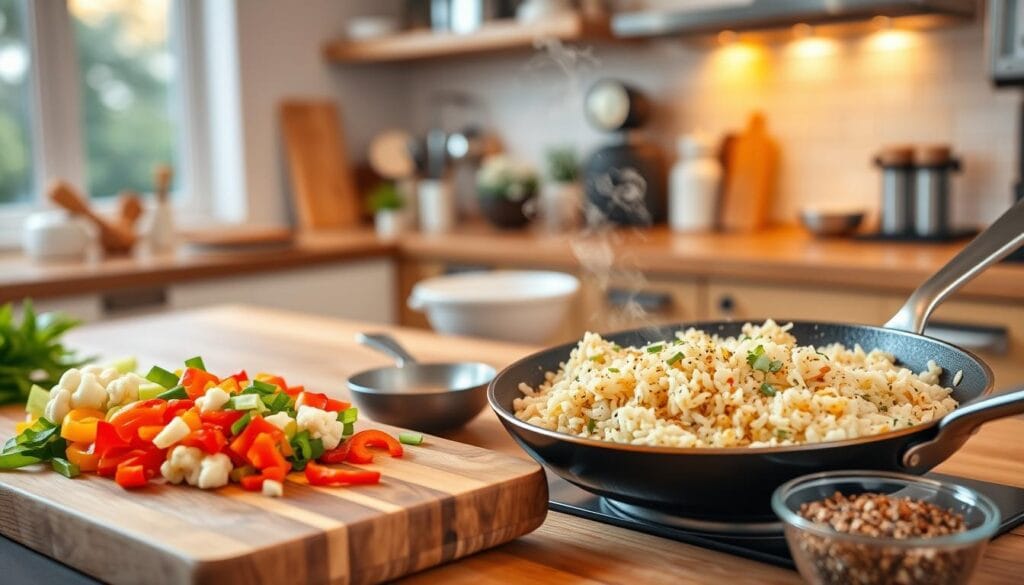
Avoiding common errors makes the difference between a soggy disappointment and a flavorful success. Pay attention to temperature control and timing.
Maintaining a High Heat in the Pan
Your skillet needs to be properly hot before you begin. Preheat the empty pan for two minutes over medium-high heat.
Add your cooking oil and wait thirty seconds for it to shimmer. Ingredients should sizzle immediately when they hit the surface.
This high heat creates slightly crispy, caramelized edges. It prevents steaming and ensures quick cooking.
Avoiding Mushy Cauliflower
Overcooking is the biggest threat to your cauliflower rice texture. Cook for exactly five minutes while stirring frequently.
Watch for excess moisture pooling in your pan. If this happens, increase the heat slightly and stir more often.
Frozen cauliflower releases more water than fresh. Adjust your technique accordingly to prevent sogginess.
| Cooking Technique | Proper Method | Common Mistake | Result |
|---|---|---|---|
| Heat Level | Medium-high, consistent | Too low, fluctuating | Crispy vs. steamed texture |
| Cooking Time | 5 minutes, frequent stirring | Overcooking, infrequent stirring | Fluffy vs. mushy consistency |
| Pan Preparation | Preheat 2 minutes before oil | Add ingredients to cold pan | Proper sizzle vs. no browning |
Season with pepper at the end for best flavor. Proper technique ensures your cauliflower maintains a rice-like texture without becoming waterlogged.
Creative Variations for a Unique Dish
The beauty of this adaptable preparation lies in its ability to accommodate diverse ingredients and dietary needs. You can easily customize the base to create exciting new versions that keep your meals interesting.
Adding Chicken, Pork, or Shrimp
Transform your meal with different protein choices. For chicken, use ½ pound of diced breast or thighs cooked separately before adding the cauliflower base.
Pork options include ground meat or thinly sliced tenderloin. Cook these for 5-7 minutes with basic seasoning before incorporating them into your dish.
Shrimp adds a delicate seafood flavor. Add ½ pound of peeled shrimp after the vegetables cook, giving them just 1-2 minutes per side until pink.
Vegetarian and Vegan Alternatives
The original recipe works well for vegetarians with its egg content. For a vegan version, substitute scrambled tofu or increase the vegetable quantity.
Additional vegetable options like broccoli, mushrooms, or bell peppers enhance both flavor and nutrition. Snow peas add vibrant color and crisp texture.
| Protein Type | Preparation Method | Cooking Time | Flavor Profile |
|---|---|---|---|
| Chicken | Cook separately, then combine | 3-4 minutes | Savory, versatile |
| Pork | Brown before vegetables | 5-7 minutes | Rich, hearty |
| Shrimp | Add after vegetables | 1-2 minutes per side | Delicate, seafood |
| Tofu | Scramble with vegetables | 2-3 minutes | Mild, adaptable |
Each protein choice creates a distinct eating experience while maintaining the dish’s fundamental appeal. Experiment to discover your favorite combination.
Using Cauliflower vs. Konjac Rice Noodles
Exploring alternative low-carb bases opens up new possibilities for your favorite dishes. While cauliflower rice serves as an excellent foundation, konjac rice noodles offer another compelling option for those watching their carb intake.
These two ingredients provide distinct experiences while serving the same purpose in your low carb cooking repertoire.
Texture and Flavor Comparison
Konjac rice noodles, also called shirataki noodles, come from the konjac plant root. They contain mostly water and fiber, creating a chewier texture that some find closer to traditional grains.
Your cauliflower rice preparation offers a more vegetable-forward experience. The texture remains lighter and grain-like but maintains its vegetable character.
When you open konjac noodles, you might notice a slight odor from the konjac root. This disappears completely after thorough rinsing.
When to Choose Each Option
Select konjac rice when you need the absolute lowest net carbs possible. With zero net carbs and only five calories per serving, it’s ideal for strict low carb plans.
Choose cauliflower rice when you prefer whole-food ingredients. It provides additional vitamins and minerals while avoiding the initial preparation konjac requires.
Both options use the same cooking method. Simply drain and rinse konjac noodles or prepare your cauliflower base, then cook in hot oil for 4-5 minutes.
From a practical standpoint, cauliflower rice is typically more affordable and widely available. Konjac products might require specialty stores or online ordering.
Enhancing Flavor with Condiments and Sauces
The right combination of sauces and garnishes can transform simple ingredients into a restaurant-worthy experience. Mastering these flavor enhancers ensures your dish achieves that authentic takeout taste you crave.
Three essential components work together to create the signature profile. Each contributes distinct notes that balance salty, spicy, and aromatic elements perfectly.
Integrating Soy Sauce, Coconut Aminos, and Sriracha
Begin with your base sauce. Traditional soy sauce provides the fundamental salty, umami flavor. Use about two tablespoons, adjusting to your preference.
For a soy-free alternative, coconut aminos work beautifully. They offer a similar profile with lower sodium content. Find them at Trader Joe’s or most health food stores.
Add heat and complexity with sriracha. One tablespoon gives noticeable spice. Reduce to one teaspoon for milder flavor or omit it entirely.
The secret to great flavor isn’t a single ingredient—it’s how the salty, spicy, and aromatic elements dance together on your palate.
Finishing with Toasted Sesame Oil and Green Onions
Toasted sesame oil is critical for authentic aroma. Add one teaspoon at the very end as a finishing oil. Heat diminishes its delicate, nutty character.
Use green onions strategically for layered flavor. Cook the white parts with your vegetables for a mild base. Stir the green parts in at the end for fresh bite.
Remember to incorporate garlic during cooking. Give it just one minute to become fragrant without burning. Season with salt cautiously since your soy sauce already adds sodium.
| Sauce Type | Primary Flavor | Usage Amount | Best Added |
|---|---|---|---|
| Soy Sauce | Salty, Umami | 2 tablespoons | During cooking |
| Coconut Aminos | Milder, Sweet | 2 tablespoons | During cooking |
| Toasted Sesame Oil | Nutty, Aromatic | 1 teaspoon | At the end |
| Sriracha | Spicy, Garlicky | 1 tablespoon | Final stages |
Taste as you go and adjust these elements until they match your personal preference. The balance makes your creation truly exceptional.
Essential Keto Fried Rice Tips
The key to successful low-carb cooking lies in balancing taste with nutritional targets. Understanding your meal’s composition helps you stay within daily limits while enjoying satisfying flavors.
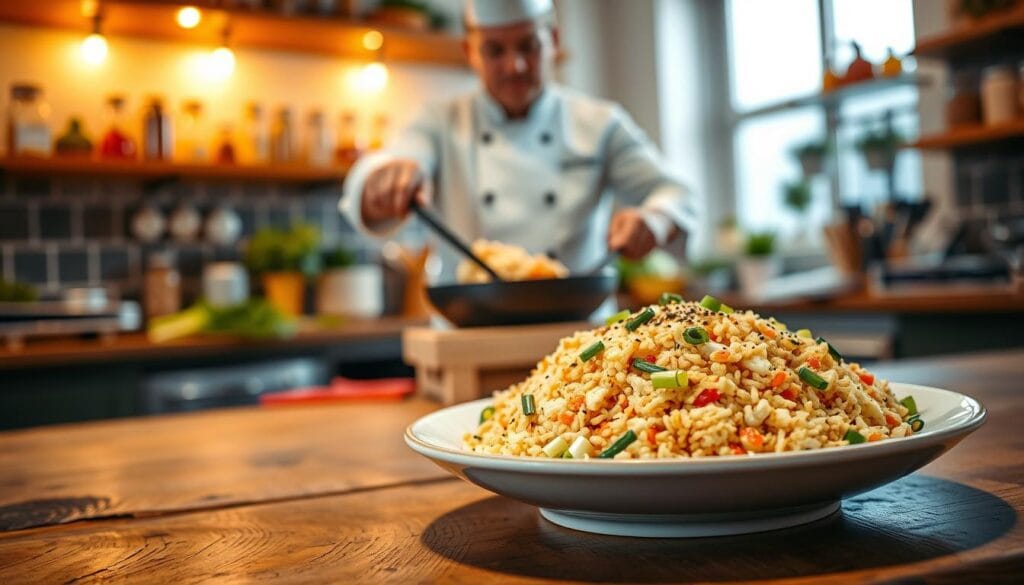
This preparation maintains excellent flavor while keeping carbohydrate counts manageable. Each serving typically contains 5-11 grams of net carbohydrates.
Balancing Net Carbs and Flavor
Your ingredient choices directly impact the final nutritional profile. The table below shows how different versions compare.
| Ingredient Version | Calories | Net Carbs | Fat | Protein |
|---|---|---|---|---|
| Standard Cauliflower | 146 | 10.7g | 6.2g | 8.7g |
| Light Version | 114 | 5g | 8g | 4g |
| Konjac Rice Base | ~130 | ~8g | 6-8g | 4-8g |
Focus on essential flavor components like soy sauce for umami and toasted sesame oil for aroma. These provide authentic taste without excessive carbohydrates.
Measure liquid seasonings carefully as they contribute to your daily totals. The moderate fat content makes this a lighter option that fits well within most eating plans.
Remember that most people aim for 20-30 grams of net carbs daily. One serving uses only about 20-50% of your allowance, leaving room for other meals.
Meal Prep Strategies and Serving Suggestions
Transform your busy schedule with efficient preparation techniques that keep delicious, healthy options readily available. This versatile creation shines as both a main course and complementary side, making weekly planning straightforward.
Quick Prepping for the Keto Diet
Prepare a large batch on Sunday to enjoy throughout your work week. Store individual portions in airtight containers for up to five days. This approach saves valuable time during hectic weekdays.
Your complete meal stays fresh when refrigerated properly. If you include proteins like chicken, they maintain quality for four days. The cauliflower base retains its appealing texture when stored correctly.
Reheating and Maintenance Tips
For optimal texture, reheat servings in a 350°F oven for seven to ten minutes. This method restores the dish’s original quality better than microwaving. If you’re short on time, two minutes in the microwave works well.
Cover microwave containers with a damp paper towel to prevent drying. Alternatively, use a hot skillet for four to five minutes to refresh the texture. This can even add extra crispiness to leftovers.
Pair this versatile side with grilled proteins or enjoy it alone for lunch. It complements Asian-inspired main courses beautifully. The recipe serves as a satisfying midday meal when combined with egg drop soup.
Conclusion
You now have a powerful new tool in your healthy eating toolkit. This recipe demonstrates that enjoying your favorite comfort food while sticking to your goals is entirely possible.
Creating a satisfying, low-carb meal doesn’t have to be complicated or time-consuming. In just twenty minutes, you can have a delicious dish on the table.
The versatility of this cauliflower-based creation is a major advantage. You can easily customize it with different proteins and vegetables to keep your menus exciting.
Whether served as a hearty side or a standalone dish, it’s a nutrient-dense option that supports a healthy lifestyle. Best of all, it uses affordable, common ingredients.
By mastering this simple method, you’ve learned a fundamental technique for low-carb cooking. Feel confident to experiment and make this recipe your own.
If you enjoy keto fried rice, love cauliflower fried rice keto, and need 20-minute budget keto meals, explore more affordable low-carb dinners packed with flavor. Discover more easy meals in Budget-Friendly Keto Recipes.
FAQ
Can I use frozen cauliflower instead of fresh?
Yes, frozen riced cauliflower works well. It’s a convenient option that saves time. Just be sure to thaw and thoroughly drain it to remove excess moisture. This prevents your dish from becoming soggy.
What is the best way to add more protein to this meal?
You can easily boost the protein content. Try adding diced chicken, shrimp, or pork during the cooking process. For a vegetarian option, consider crumbling in firm tofu or mixing in edamame for extra plant-based protein.
How do I prevent the cauliflower from getting mushy?
The key is to use high heat and avoid overcrowding the pan. Cook the riced cauliflower in a single layer if possible. This allows moisture to evaporate quickly, resulting in a firmer, rice-like texture instead of a soft, wet mash.
Is there a substitute for soy sauce to keep it gluten-free?
Absolutely. Coconut aminos are an excellent alternative. They provide a similar salty, umami flavor without the gluten or wheat. Tamari is another good option, but always check the label to ensure it’s gluten-free.
Can I meal prep this dish for the week?
This recipe is fantastic for meal prep. Let the dish cool completely before dividing it into airtight containers. It will stay fresh in the refrigerator for 3-4 days. Reheat it in a skillet over medium heat to restore the best texture.
What’s the difference between using cauliflower and konjac rice?
Cauliflower rice has a mild, vegetable-forward flavor and a texture that closely mimics traditional grains. Konjac rice, often sold as shirataki rice, has a very neutral taste but a more gelatinous, chewy texture. Cauliflower tends to absorb flavors from sauces like sesame oil better.